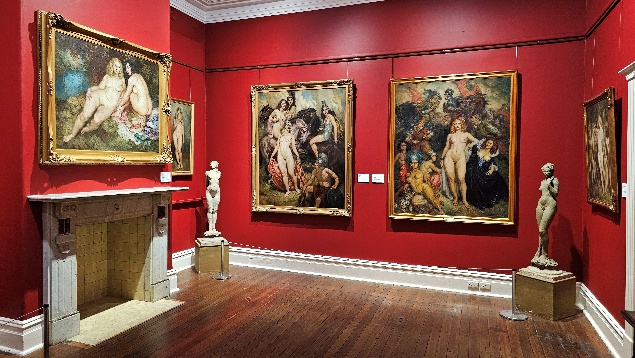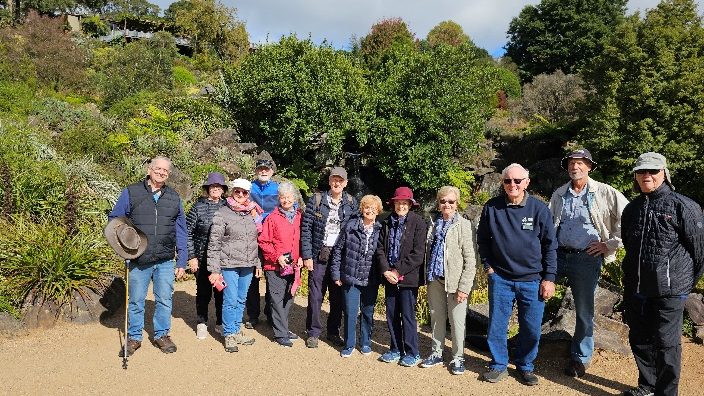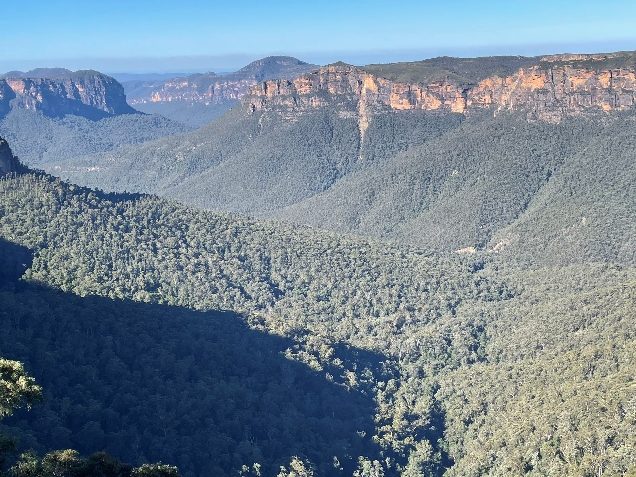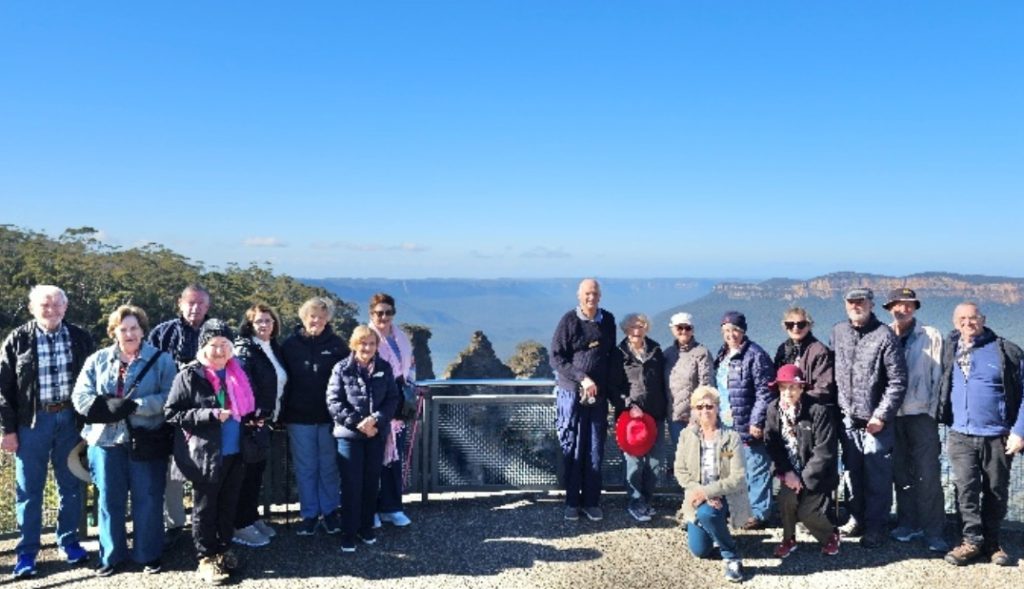
Taringa Probus members flew to Sydney in April 2026 for a seven-day trip to Sydney and the Blue Mountains, hosted by Trade Travel. The group enjoyed great company, fine autumn weather and impressive sights. The first stop was the Norman Lindsay Gallery in Springwood, where members viewed many works by the often-controversial sculptor and painter, including the beloved children’s book The Magic Pudding. Next was Govetts Leap Lookout near Blackheath, offering breathtaking views of the sandstone escarpments, deep canyons and waterfalls of the Grose Valley in the Blue Mountains.
The group stayed in Lithgow for four nights to visit key attractions, including Lithgow Blast Furnace Park, where the first commercial iron and steel in Australia was produced in 1900 before operations moved to Port Kembla in 1928; a ride on the historic 3-foot 6-inch gauge Zig Zag Heritage Steam Train, established in 1869; Eskbank House, built in 1842 and one of the oldest residences in the Lithgow Valley; and the State Mine Heritage Park Museum, located on the site of the original Lithgow State Coal Mine (1916–1932).
A major highlight was the spectacular views of the valleys, sandstone cliffs, and the Three Sisters from Echo Point. Members rode the Scenic Railway, the steepest passenger train in the world, as well as the Scenic Cableway and the Scenic Skyway with its glass floor.
At Leura, on the edge of the valley, the group stepped back in time with a guided tour of the elegant Hydro Majestic Hotel, built in 1904, followed by a visit to the National Trust Everglades Gardens. The tour continued to Portland for an informative visit to the state-of-the-art coal-fired Mt Piper Power Station and the site of the original Portland Cement Works to view the silo murals and museum. A visit to the Lithgow Small Arms Factory Museum showcased impressive displays. The factory opened in 1912 and employed up to 6,000 people during World War II. No visit to Lithgow was complete without seeing the statue of Marjorie Jackson, the “Lithgow Flash”, the first Australian woman to win an Olympic gold medal in track and field, claiming gold in both the 100 and 220 yards at the 1952 Helsinki Olympics.
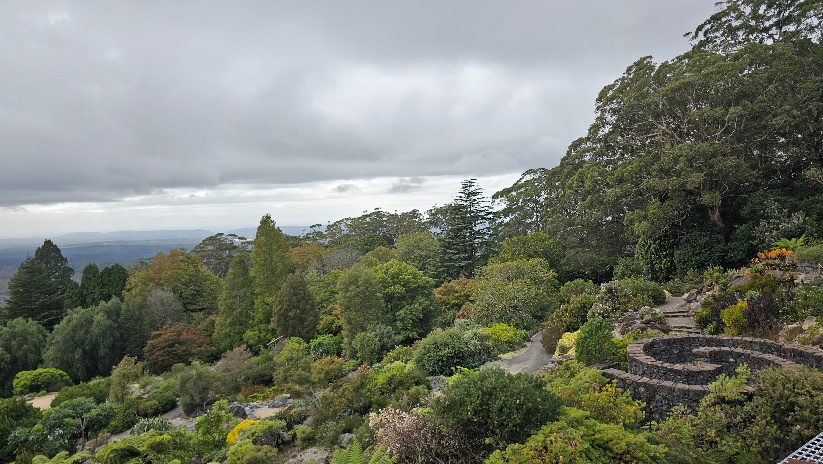
On the final day in the Blue Mountains, the group visited the spectacular Blue Mountains Botanic Garden at Mount Tomah, located 1,000 metres above sea level in a UNESCO World Heritage Area.
On the return journey to Sydney, members toured the World Heritage-listed Old Government House at Parramatta, the oldest surviving public building in Australia and the residence of 12 Governors between 1788 and 1856. Another highlight was a guided tour of the iconic World Heritage-listed Sydney Opera House, completed in 1973, 16 years after principal architect Jørn Utzon won the international design competition. Members marvelled at the 2,679-seat Concert Hall, home of the Sydney Symphony Orchestra, and the 1,507-seat Joan Sutherland Theatre, home of Opera Australia and The Australian Ballet.
A relaxing lunchtime harbour cruise was followed by a sightseeing drive through Sydney’s exclusive southern beach suburbs. On the final day, the group visited Sydney Olympic Park, the impressive precinct developed for the 2000 Sydney Olympic Games. After a visit to Warragamba Dam, Sydney’s main water supply, members departed for Brisbane, bringing a memorable journey to a close.